
Child development · 1 November 2026
“Can I Play Too?” Helping Children Explore Social Situations Through Sensory Stories
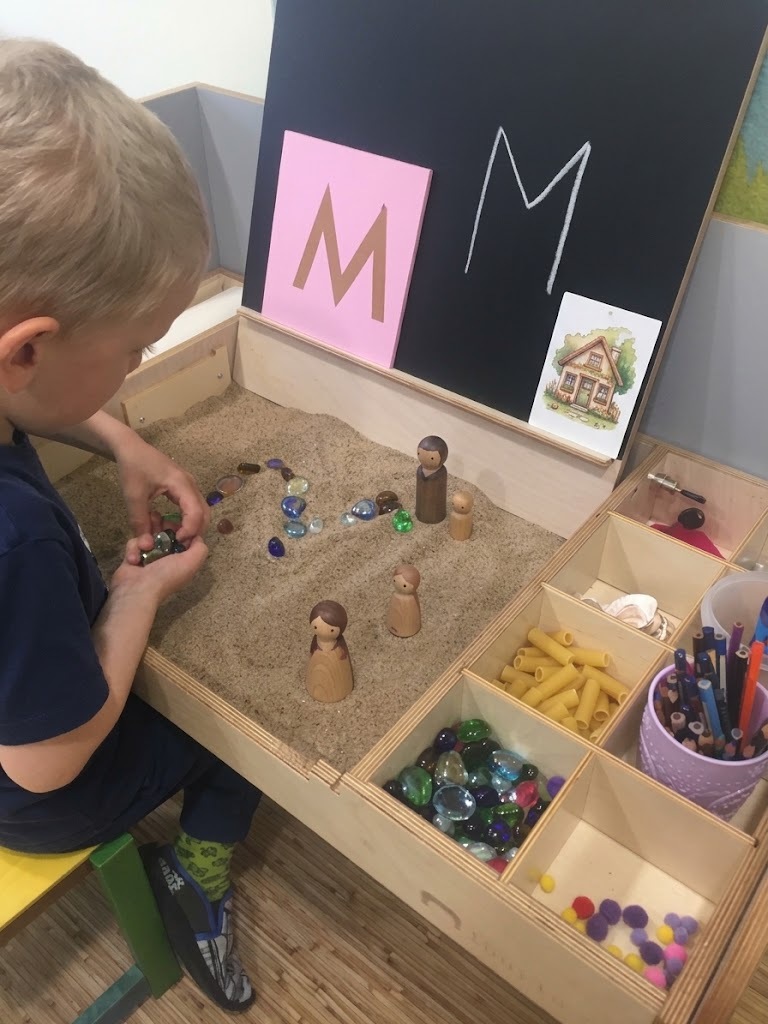
At home, your child has plenty to say. At the playground, they stand beside you, watching the other children without moving closer. Or they rush straight in, reach for someone’s toy, and suddenly everyone is upset. You have explained about asking, waiting and taking turns. Perhaps more than once that morning. Yet in the moment, those words seem to disappear. It can be hard to know what else to offer a child who wants to join in but hasn’t quite worked out how.
We often give children advice at the very moment it is hardest to use. “Ask nicely.” “Wait your turn.” “Tell them how you feel.” Reasonable suggestions — but quite a lot to manage when someone has just taken the red truck.
A story gives you somewhere quieter to begin.
Two toy animals, a small patch of sand and a familiar problem can be enough. Here, nobody is waiting for your child to get it right. You can pause, go back, or let the rabbit try again.
Start with the moment that feels difficult
“Learning social skills” is an adult-sized ambition. For a young child, the difficulty is usually much more specific.
Someone is already sitting on the swing. A visitor wants a hug. The children at preschool have started a game, and your child doesn’t know where to fit.
Choose one of those moments. Make a short story around what happens, what the character might feel, and what they could try.
For example:
Bear arrives at the sandpit. Rabbit is filling a bucket. Bear wants to help, but he doesn’t know whether Rabbit wants help. He stands nearby for a moment.
There is no need to rush towards the lesson. Let your child look at the scene.
“Bear wants to play. What could he do?”
If your child has no answer, you can lend Bear a few words: “Can I help?” Or show him picking up another bucket and playing nearby.
Stories about everyday situations can give children something concrete to explore. You do not need an elaborate plot. The familiar difficulty is already interesting enough.
Give the story something your child can touch
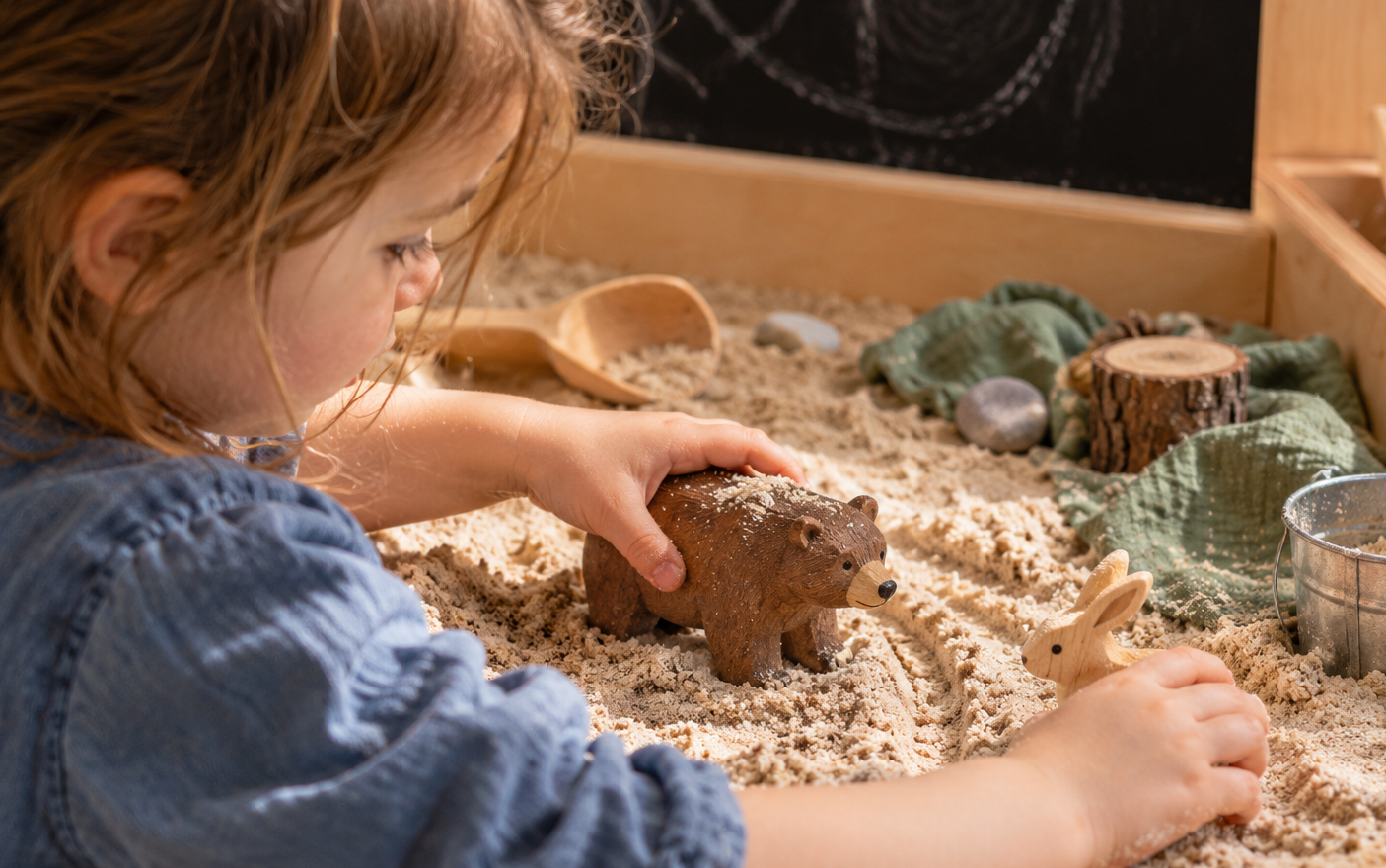
Try placing two toy animals beside an empty bucket. Add a little sand, and there is something to scoop, offer, spill and wait for.
Now “taking turns” has a visible shape. Rabbit holds the scoop. Bear waits. Rabbit puts it down. Bear picks it up.
That is the useful part of sensory storytelling: you can make an everyday situation small enough to explore together.
A piece of fabric might become a quiet place where Bear goes when the sandpit feels too busy. A gentle tapping sound could announce someone arriving at the door. A photograph of your child’s preschool might help set the scene for a story about saying goodbye.
Choose sensory details that belong to the story and that your child enjoys. There is no need to involve every sense. A child who dislikes touching sand can move the characters around its edges. If a sound bothers them, leave it out.
The story should leave room for their attention, rather than compete for it.
Let the Luula table become a little version of their world
At the Luula table, you can build the scene together before the story begins.
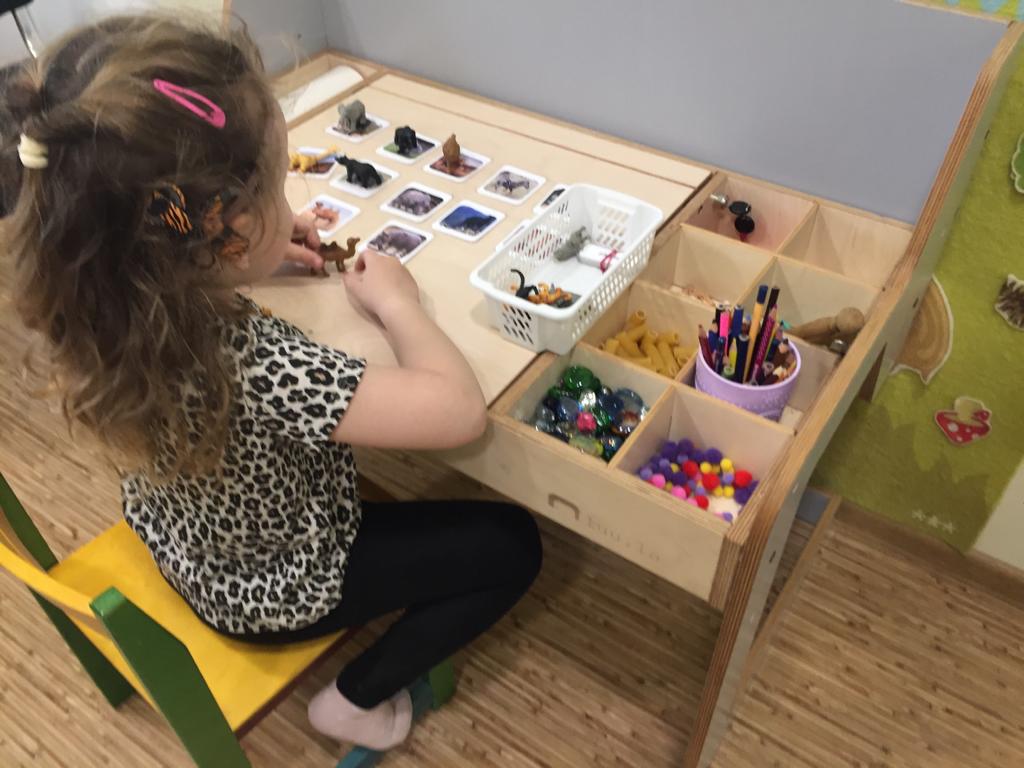
Draw a playground path on the chalkboard. Use the sand tray for the sandpit and keep a few characters in the side boxes. On the acrylic board, add a drawing or a familiar photograph to show where the story takes place.
Keep it simple enough for your child to change.
Perhaps they move the quiet corner farther away. Perhaps they give Bear a second bucket. Perhaps they decide that Rabbit is the one who needs help.
Those changes are worth following. You may have started with a story about sharing and discovered that your child is more interested in having somewhere to play without being interrupted.
Making the props can be part of this, too. A paper tree or a roughly shaped dough animal gives your child something of their own to bring into the scene. It does not need to look like your version.
Leave room for an answer you didn’t expect
It is tempting to guide every story towards a tidy ending: Bear asks politely, Rabbit says yes, and they play happily together.
But what happens when Rabbit says no?
That deserves a place in the story as well.
Rabbit is still using the bucket. Bear feels disappointed. He can ask for a turn when Rabbit has finished, choose another toy, or find a grown-up if he needs help.
You can acknowledge the feeling without immediately trying to remove it.
“He really wanted that bucket.”
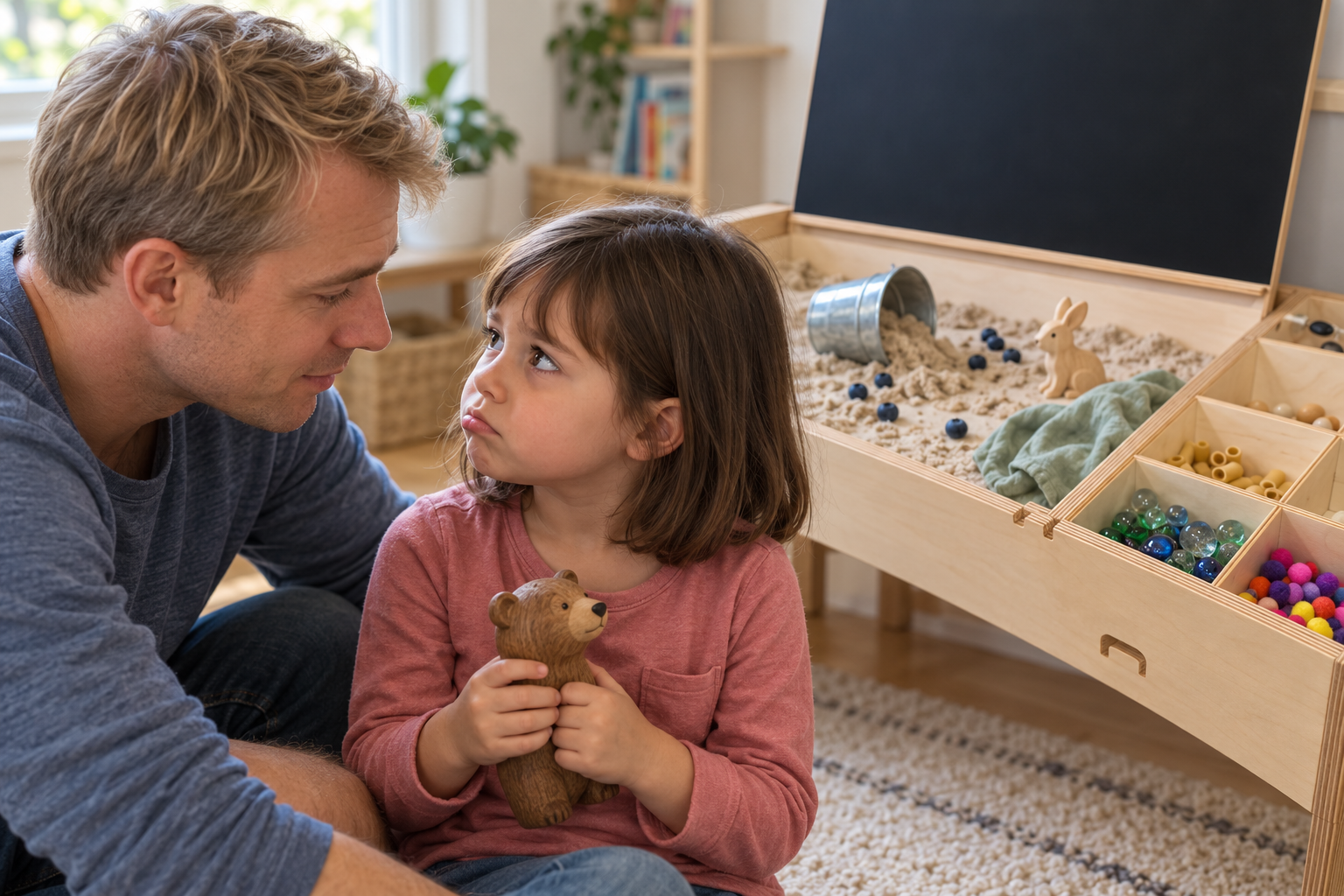
Then pause. Your child might offer a solution. They might make Bear cry. They might replay the same moment several times.
Try to resist turning each pause into a question with a correct answer. Sometimes a comment — “Bear is standing quite far away” — leaves more room for your child to respond than “What should Bear do?”
Your child is allowed to have boundaries, too
A story about meeting people can include waving instead of hugging. A story about playing together can include wanting a little more space. A story about a birthday party can include asking for a quiet break.
We want children to find ways to connect with others. We also want them to have words for discomfort, uncertainty and “not yet.”
Let your characters practise both.
Bear can ask to join the game. Rabbit can say that he wants to finish what he is making first. Neither character has to become the villain.
Bring back one small piece of the story
Choose a calm moment to play, and stop while your child is still interested. Some days, the whole story may last only a few minutes.
Later, in a similar situation, you can offer a gentle reminder: “Would you like to try Bear’s words?” Your child may still need you beside them, helping with the first sentence.

There is no need to turn the playground into a test of what they remember.
For now, you have given them a scene they can revisit, a few words they can borrow, and the experience of exploring a difficult moment with someone who is willing to listen.
And if tomorrow Bear needs to practise again, the little bucket will still be there.