Child development · 31 October 2026
Before You Show Them How
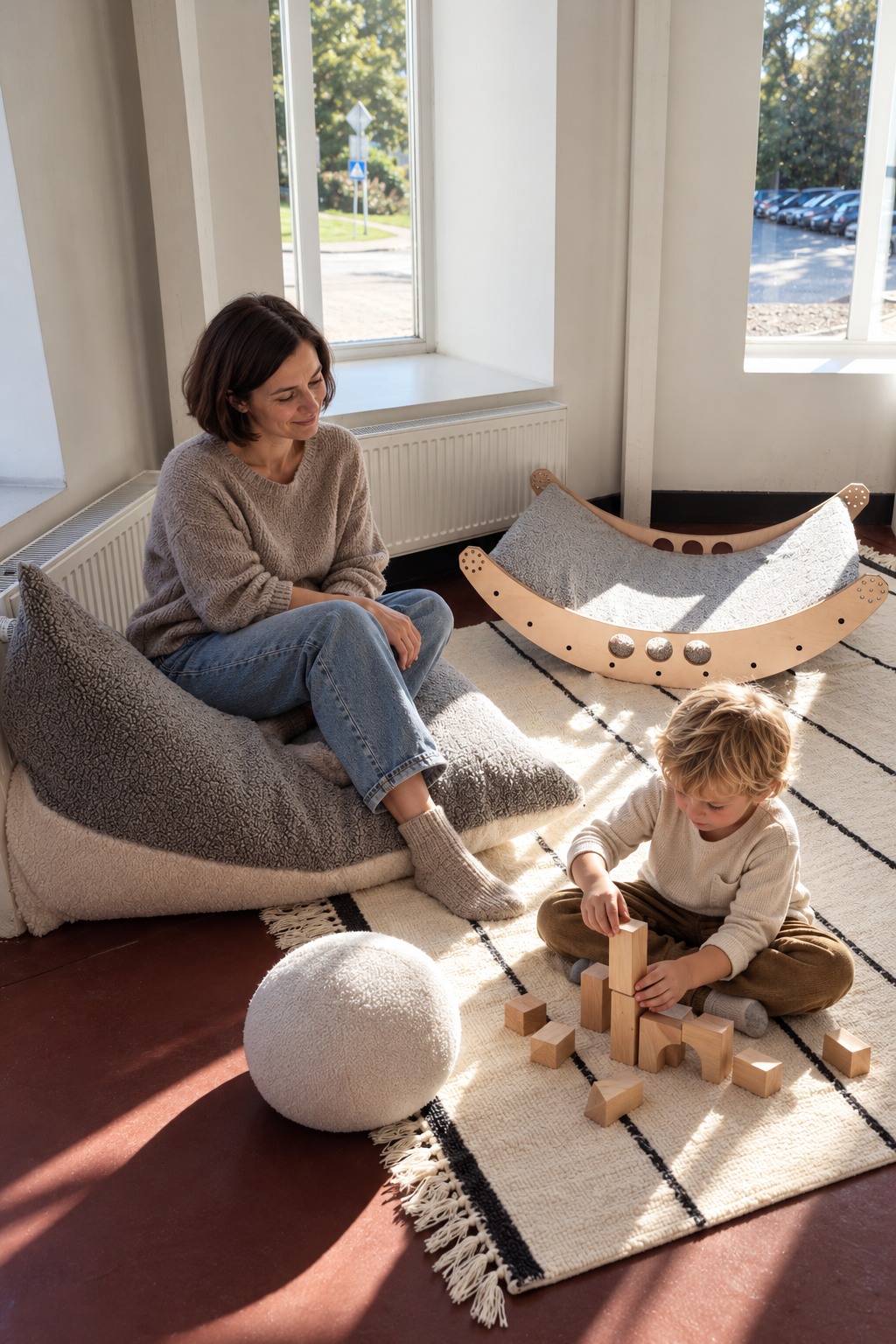
There is a familiar frustration in parenting: we want our children to have ideas of their own, yet they keep asking us what to draw, what to build, what to do next. We put out the materials. We make time. Sometimes we sit down beside them, hoping to get things started—and twenty minutes later, we are building the house while they watch.
This happens quietly, in loving homes, with attentive parents. A suggestion here. A correction there. A hand reaching over to steady something before it falls.
Making room for independence often begins with noticing that hand.
## The awkward pause before an idea
A child puts two blocks together, takes them apart, and looks around. Nothing much seems to be happening.
“Why don’t you build a garage?”
It is a perfectly reasonable suggestion. But perhaps the child was about to make something else. Perhaps they had no idea yet. We tend to treat that uncertain moment as a gap we should fill, although finding a direction is part of creative work.
Adults know this feeling. We stare into the fridge before deciding what to cook. We move a sentence around before knowing what we mean. Children deserve a little of that unfinished time, too.
Try waiting long enough to feel the urge to intervene—and then notice what happens if you hold back for another moment. The child may begin something. They may ask for help. They may abandon the blocks altogether.
There does not have to be a finished garage for the time to have been worthwhile.
## Can they begin without asking?
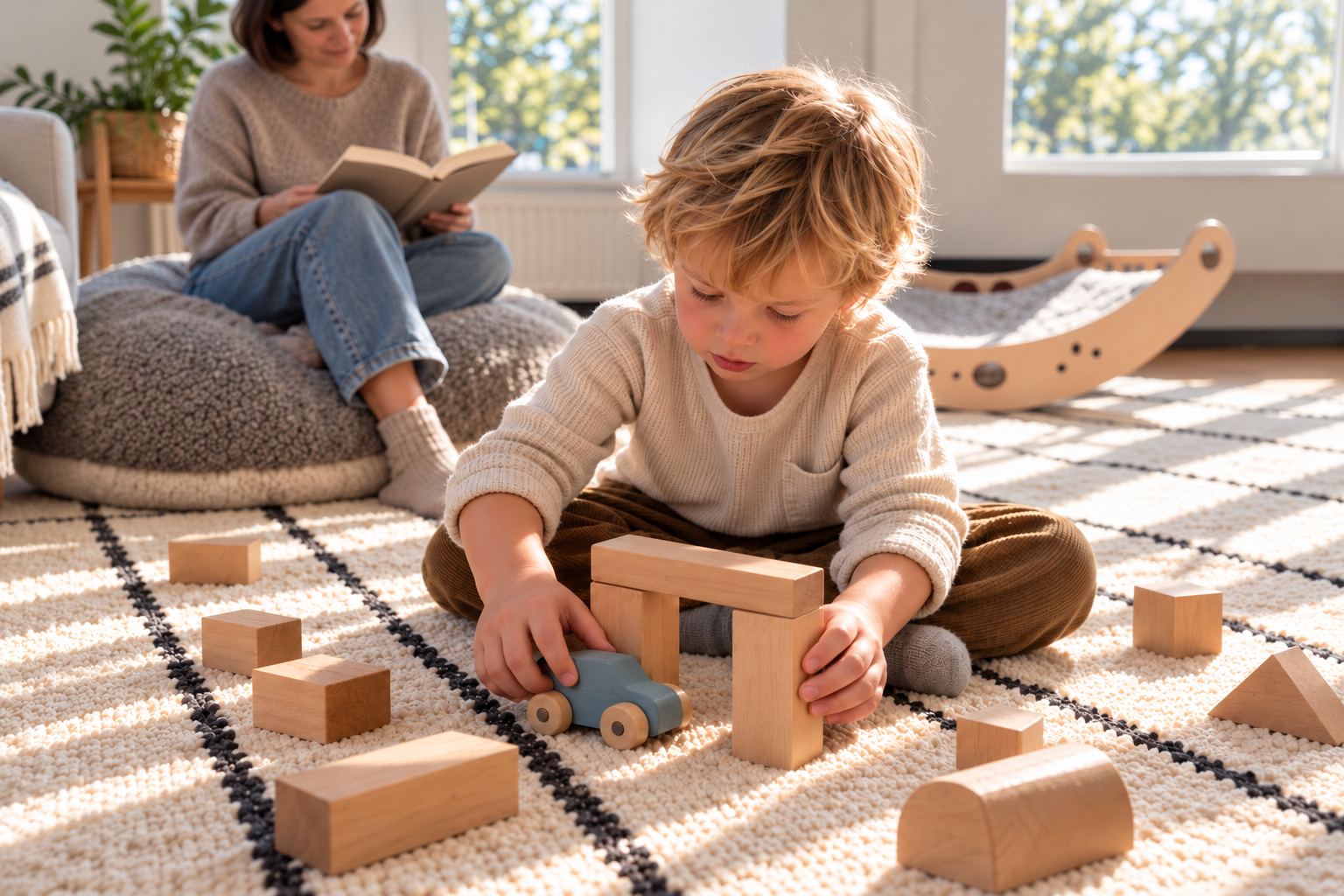
Before expecting a child to play independently, it helps to look at the room from their height.
Can they reach the paper? Open the box? Find a place to work? Is every interesting material stored somewhere that requires an adult to fetch it?
A room can look beautifully arranged and still make a child dependent on help at every turn. Equally, an ordinary corner with accessible materials can offer considerable freedom.
A few familiar things are enough: paper, pencils, blocks, perhaps some fabric or containers suitable for the child’s age. Materials that require supervision can stay out of reach. The useful question is whether there is something the child can safely choose and begin for themselves.
The same applies to everyday tasks. A reachable hook gives a coat somewhere to go. A small cloth makes wiping up a spill possible. These details matter because “I can do it” needs somewhere practical to happen.
## “Stay with me” deserves a little curiosity
When a child asks us to join them, they are not necessarily asking us to direct the play. Sometimes they want company. Sometimes getting started feels difficult. Sometimes they have spent much of the day away from us and would rather build a tower together.
We can respond to that need without automatically taking charge.
“I’ll sit here while you get started.”
“Would you like me to hold this while you attach it?”
Or simply: “Show me what you’re doing.”
There is a difference between offering the help a child needs and becoming responsible for the whole activity. We can hold the cardboard steady without deciding what it should become.
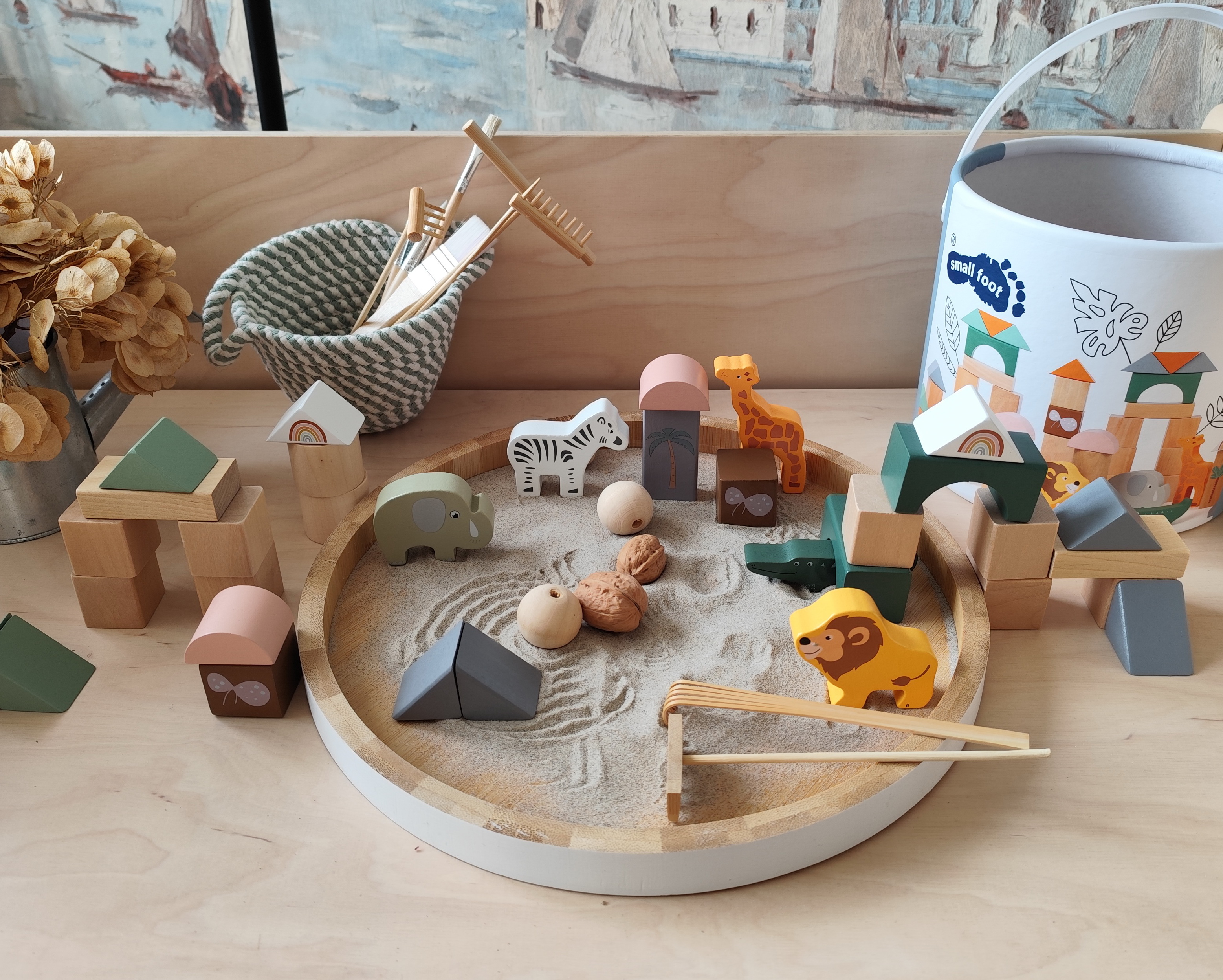
Independent play also varies from day to day. A child who played happily alone yesterday may need more closeness today. Turning it into a test—of their maturity or our parenting—adds pressure to something that needs room to develop.
## Sometimes our questions do too much
Once we decide to stop giving instructions, it is tempting to replace them with questions.
“What are you making? Why did you choose that? What could you try next?”
Before long, drawing a picture feels rather like being interviewed.
There is room for quieter attention. “You’ve covered that whole corner in blue.” Then a pause. The child can explain, continue, or say nothing at all.
When something goes wrong, a question is useful if it helps the child examine the actual difficulty. If a bridge keeps falling, “Which part moves first?” gives them something to notice. “Wouldn’t it work better with a bigger block underneath?” largely hands them our solution.
And sometimes a child needs a direct demonstration. There is no virtue in watching them struggle with a fastening they have never been shown how to use. Show the unfamiliar part, then leave them a chance to try.
With younger children, a few concrete words are often enough: “Hold here. Pull this.” Longer explanations can wait until there is attention available for them.
## Let the idea remain theirs
Creativity can be surprisingly difficult to live beside.
The roof is too small. The paint is turning brown. The carefully prepared activity has become a game about feeding scraps of paper to a toy dog.
We had imagined something else.
That small disappointment is worth noticing. It can reveal how much of the activity already belonged to us before the child began.
There will be times when a task has a necessary outcome: hands need washing, a shelf needs assembling safely, scissors need careful handling. But a drawing or an invented game can usually tolerate a direction we would not have chosen.
Before offering an improvement, ask yourself what would happen if you left it alone.
A lopsided house may collapse, and the child may rebuild it. Brown paint may be exactly right for the swamp they have just decided to make. The toy dog may be having a very good lunch.
## Help with the difficult part
“Try by yourself” can sound encouraging to an adult and feel like a closed door to a frustrated child.
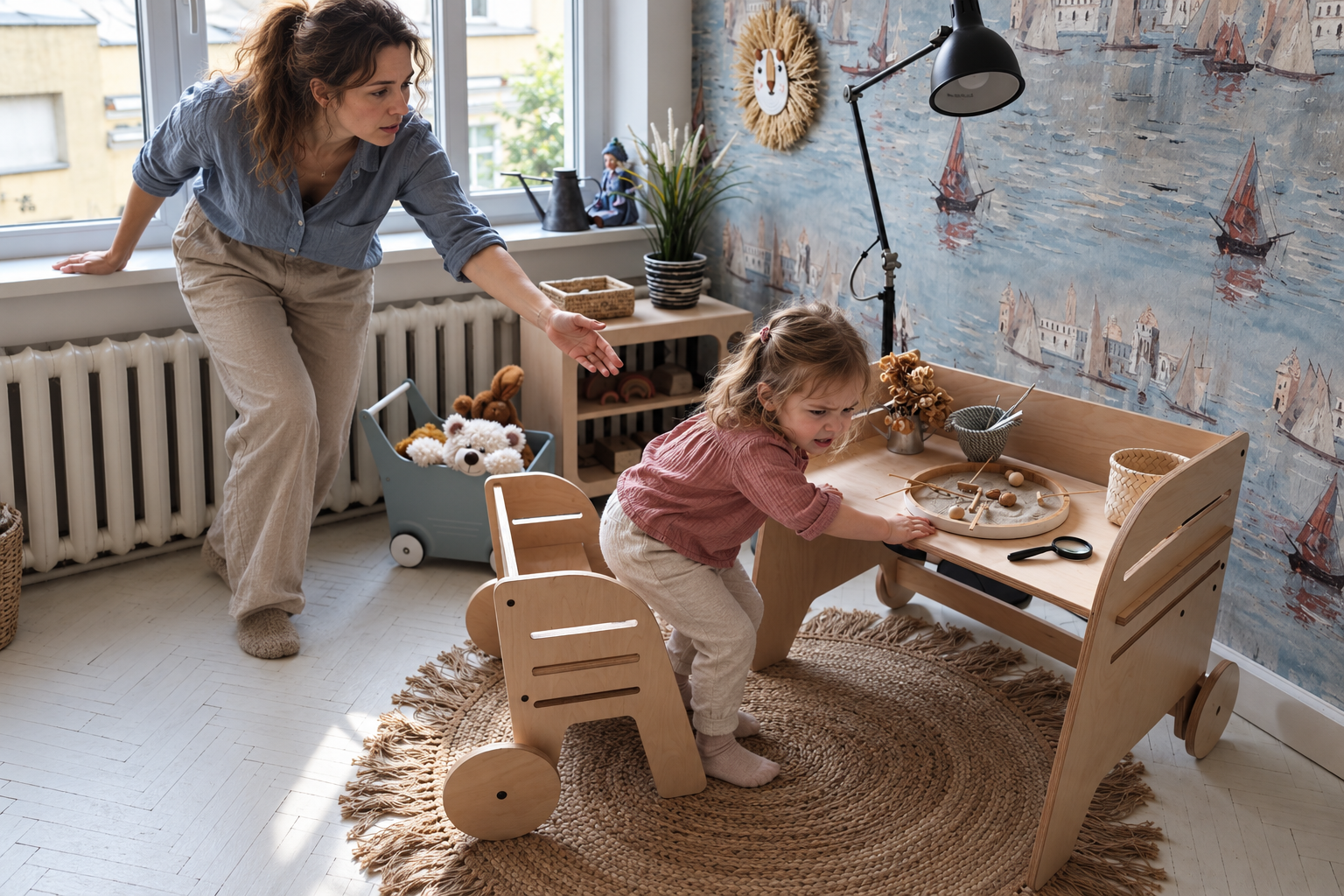
It helps to make the difficulty smaller.
A child stuck on a puzzle might need you to sit nearby, help turn the pieces face up, or find one straight edge together. After that, you can pause and see whether they want to continue.
If frustration is taking over, acknowledge it plainly: “You’ve tried that several times. It’s annoying when it still won’t fit.” There is no need to turn every difficult moment into a lesson about perseverance. A break is sometimes the most sensible next step.
The amount of help can change within the same activity. We can step closer, do one part together, and step back again. That is a judgment we keep making by watching the child in front of us.
## Notice what happens after you wait
Early signs of independence are easy to miss. A child fetches another sheet of paper without asking. Tries a different piece. Decides the tower would work better lying down.
Nothing especially impressive may result. There may be more mess, a longer wait, and an object you cannot identify.
But something has happened: the child has made a decision without first checking what you wanted.
We often look for confidence in the finished result. It is worth looking earlier—in the moment a child reaches for something, hesitates, and chooses for themselves.
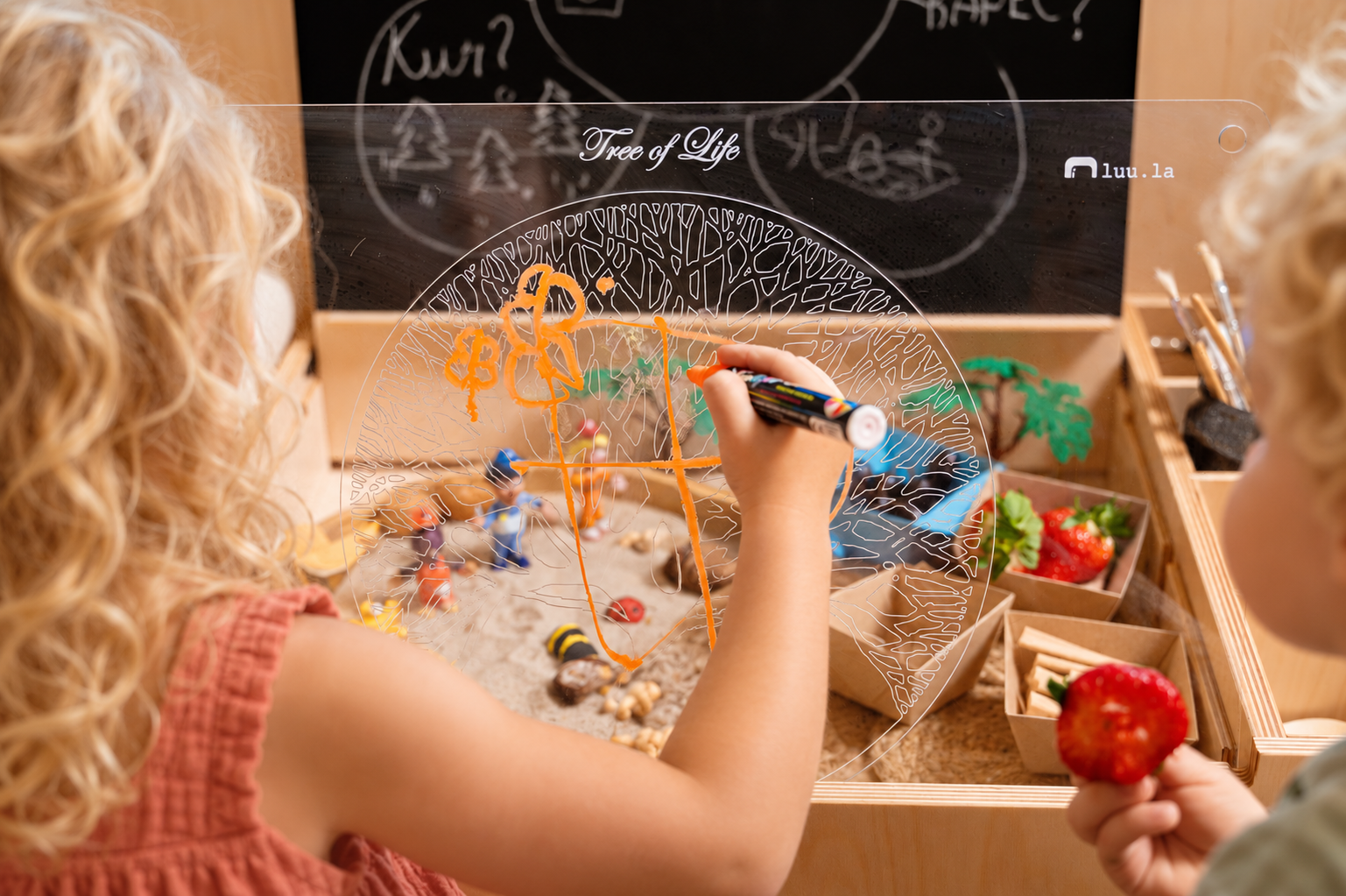
The next time you feel “Let me show you” forming in your mouth, pause for a moment.
You may still need to show them. But first, give yourself a chance to see what they were about to do.