
Child development · 12 February 2025
A Place of Their Own: Growing Up with the Luula Table
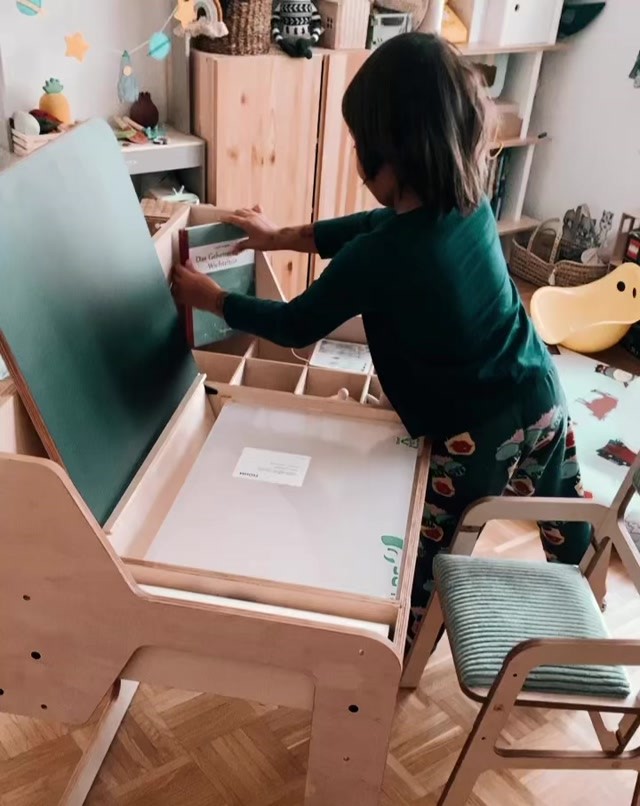
Sometimes, it starts with turning the table around
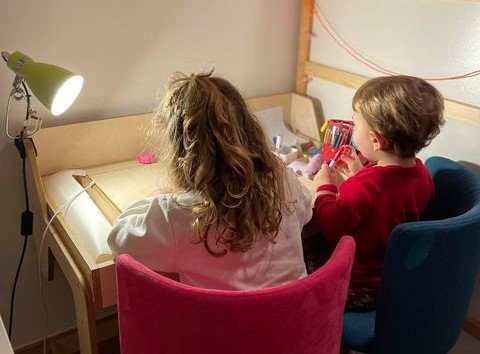
One family told us that their two-year-old daughter would not sit at her Luula table. Her parents eventually worked out what was bothering her: she could not see them while she was sitting there.
They turned the table around.
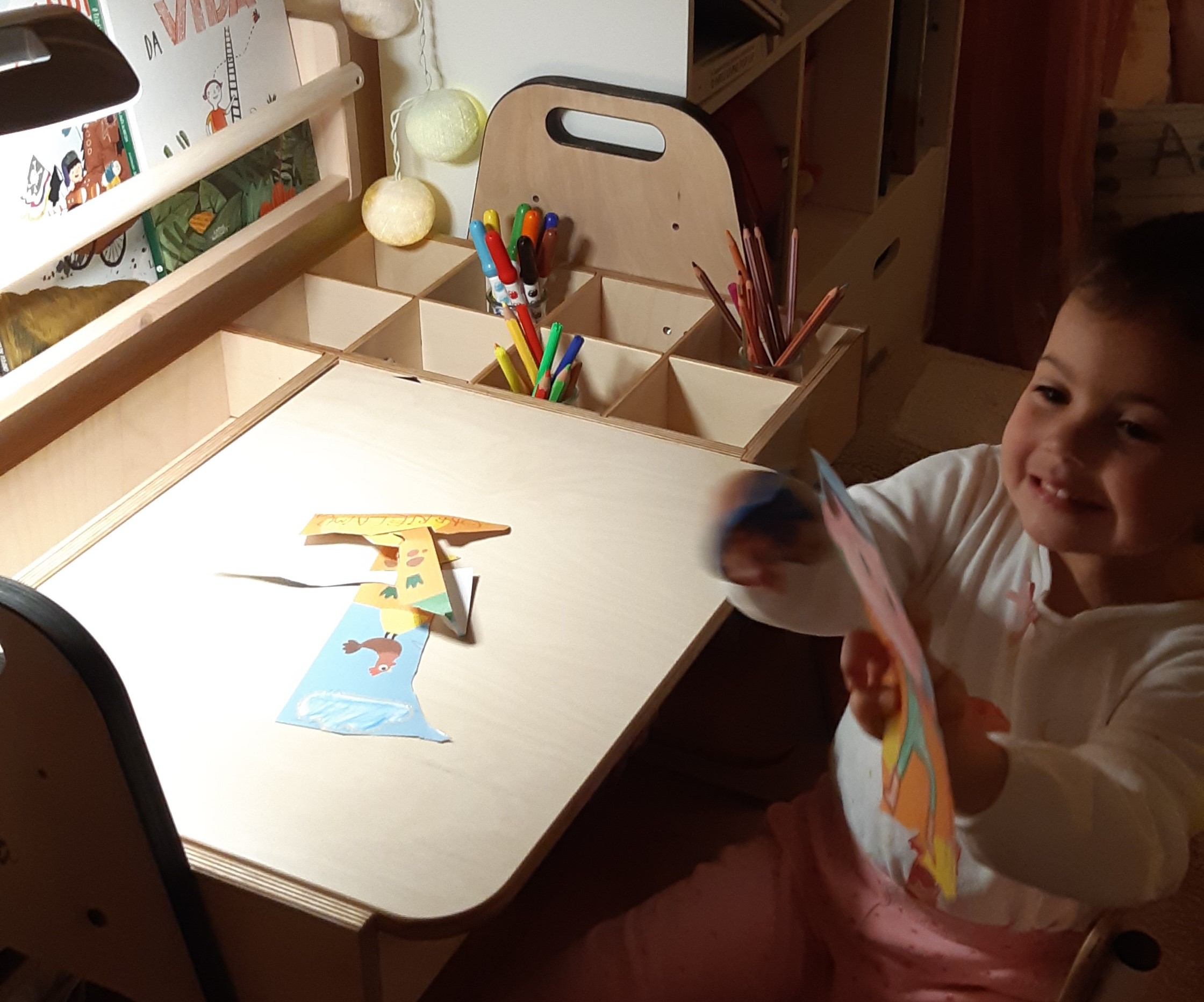
With her parents in view, it became her favourite place.
We love this story because it says something that a list of product features cannot. Having a space of your own does not necessarily mean wanting to be alone. For a small child, being able to look up and find a familiar face can make all the difference.
We have seen children become interested in the Luula table from around eighteen months, with an adult nearby and materials chosen for their age. Many seem to relax into the space. The defined work area gives their activity a little boundary; the compartments offer somewhere to put things. There is room to explore, but also a sense of where everything belongs.
Sometimes, the first absorbing activity is simply deciding what goes where.
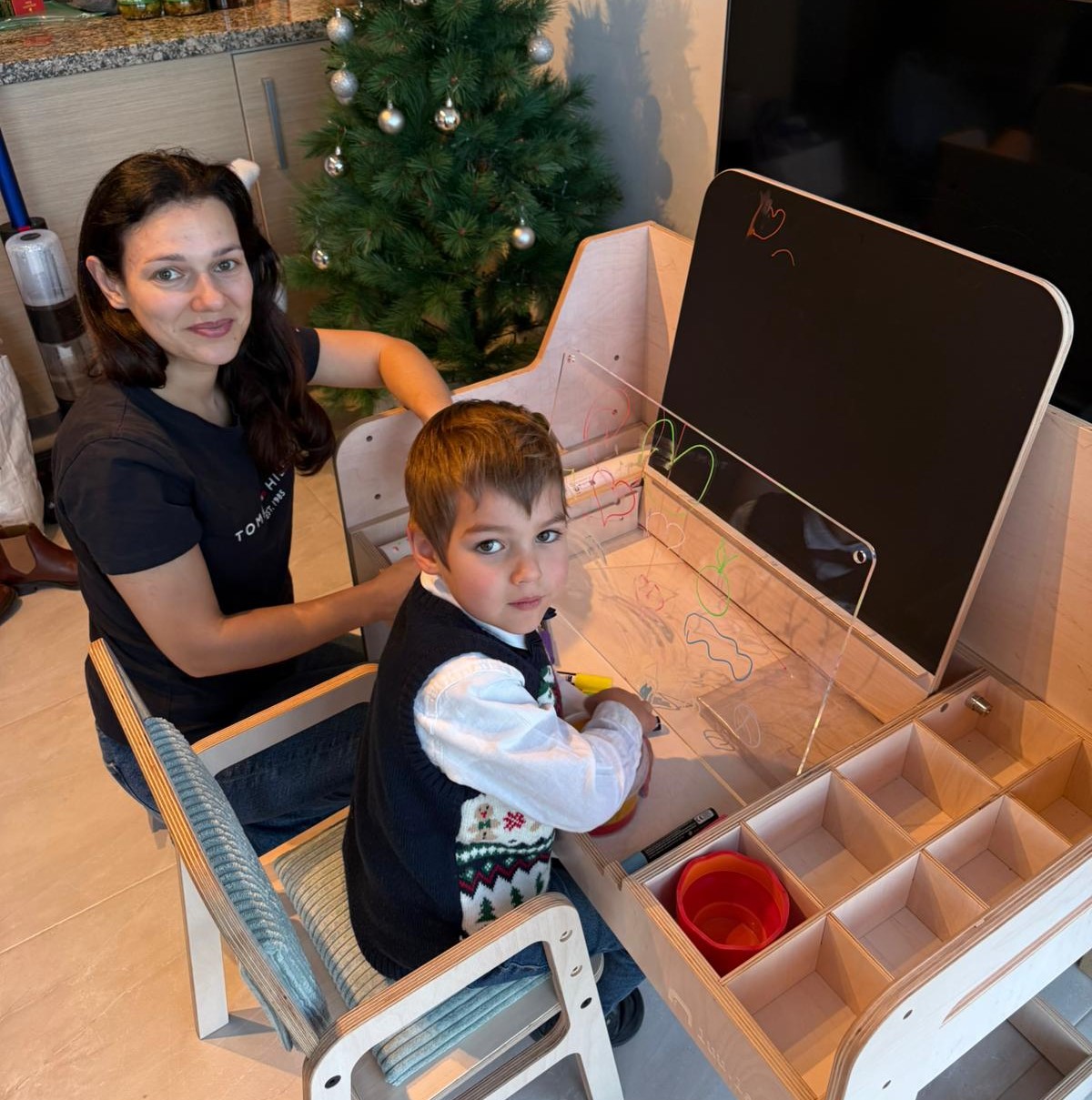
Putting things in order is part of the play
Before there are letters or sums, there are objects to move, compare, collect, and arrange.
A child might gather all the animals in one place, make a home for a favourite toy, or sort large blocks into the side containers. The sandbox can become a landscape, a construction site, or somewhere to make marks and smooth them away again.
You do not need to prepare an elaborate activity. A few thoughtfully chosen materials leave plenty for the child to decide.
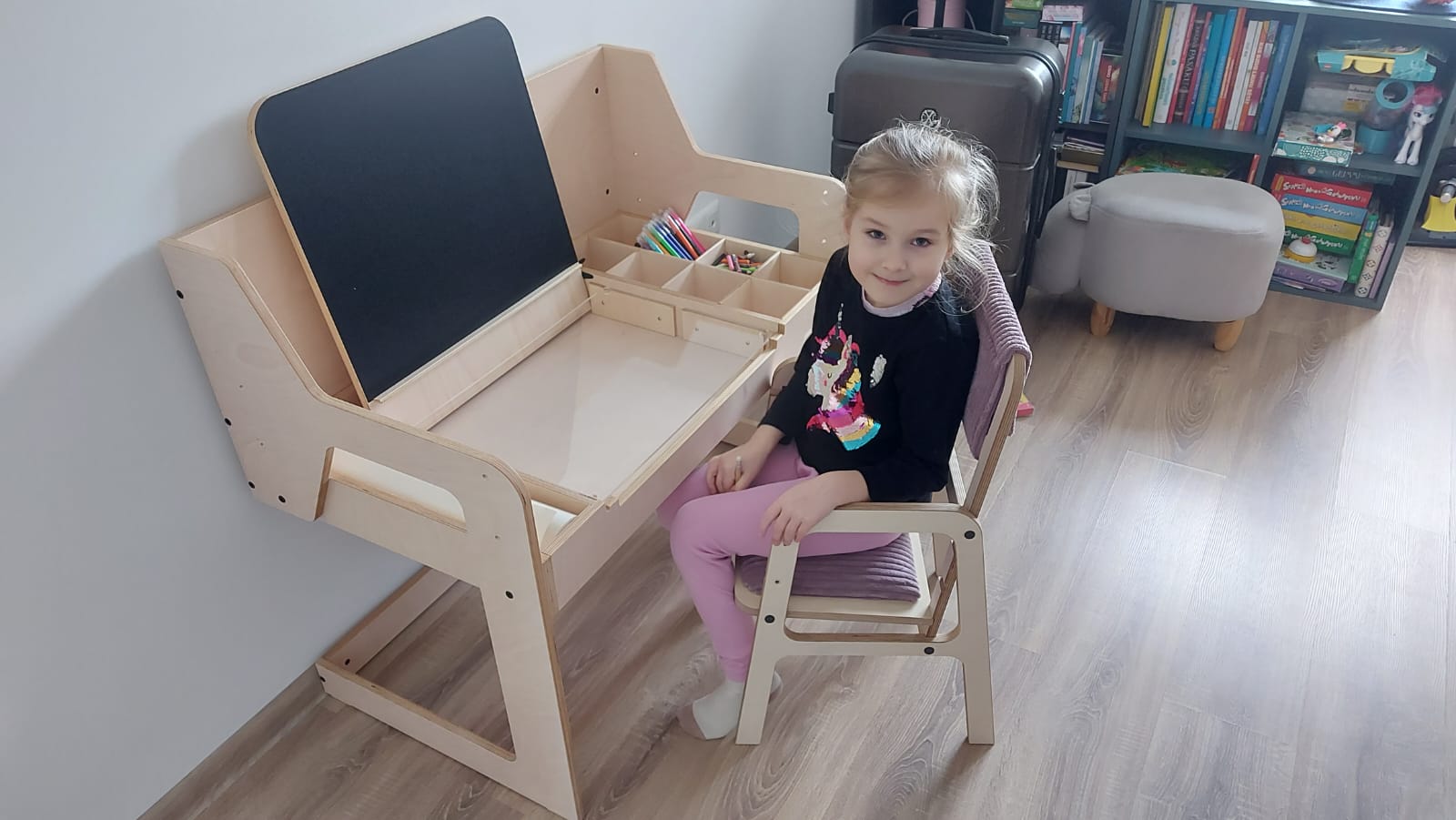
Try offering large, age-appropriate animal figures and blocks. One child may build enclosures. Another may line everything up. Another may spend the whole time moving the animals between compartments. Watch for a moment before suggesting what comes next. They may already have something in mind.
A drawing can become part of a whole world
The transparent acrylic board brings another dimension to play. Positioned horizontally over a scene or vertically as a drawing surface, it allows children to combine real objects with drawn details.
A few toy houses in the sandbox can become a neighbourhood. On the transparent board, a child can add roads, rain, clouds, or a route from one house to another. Move the board, and the relationship between the drawing and the objects changes.
This gives you something interesting to explore together. Where does the road need to go? Can everyone reach their house? What would the scene look like from the other side?
There is no need to turn every question into a lesson. Often, the most useful thing an adult can do is notice a detail and be curious about it.
Letters and numbers have somewhere to belong
As children grow, the same play can make space for reading, writing, and maths.
A pretend shop needs labels. A café needs a menu. A puppet might need a name, and then a whole story. Children can arrange objects in the sandbox, add details to the acrylic board, and use the chalkboard for prices, messages, or sentences.
For a child beginning to write, a large vertical surface offers room to try bigger movements before working on smaller marks on paper. Start with winding roads, loops, or pretend writing if that is what interests them. Letters can join in when the child is ready.
For early maths, give the play a small problem to solve. There are three animals and two beds—what could we do? A customer wants four items—how many have we packed?
The objects give children something they can move and check as they think.
There is room for stories, too
Some days, the table becomes a little theatre.
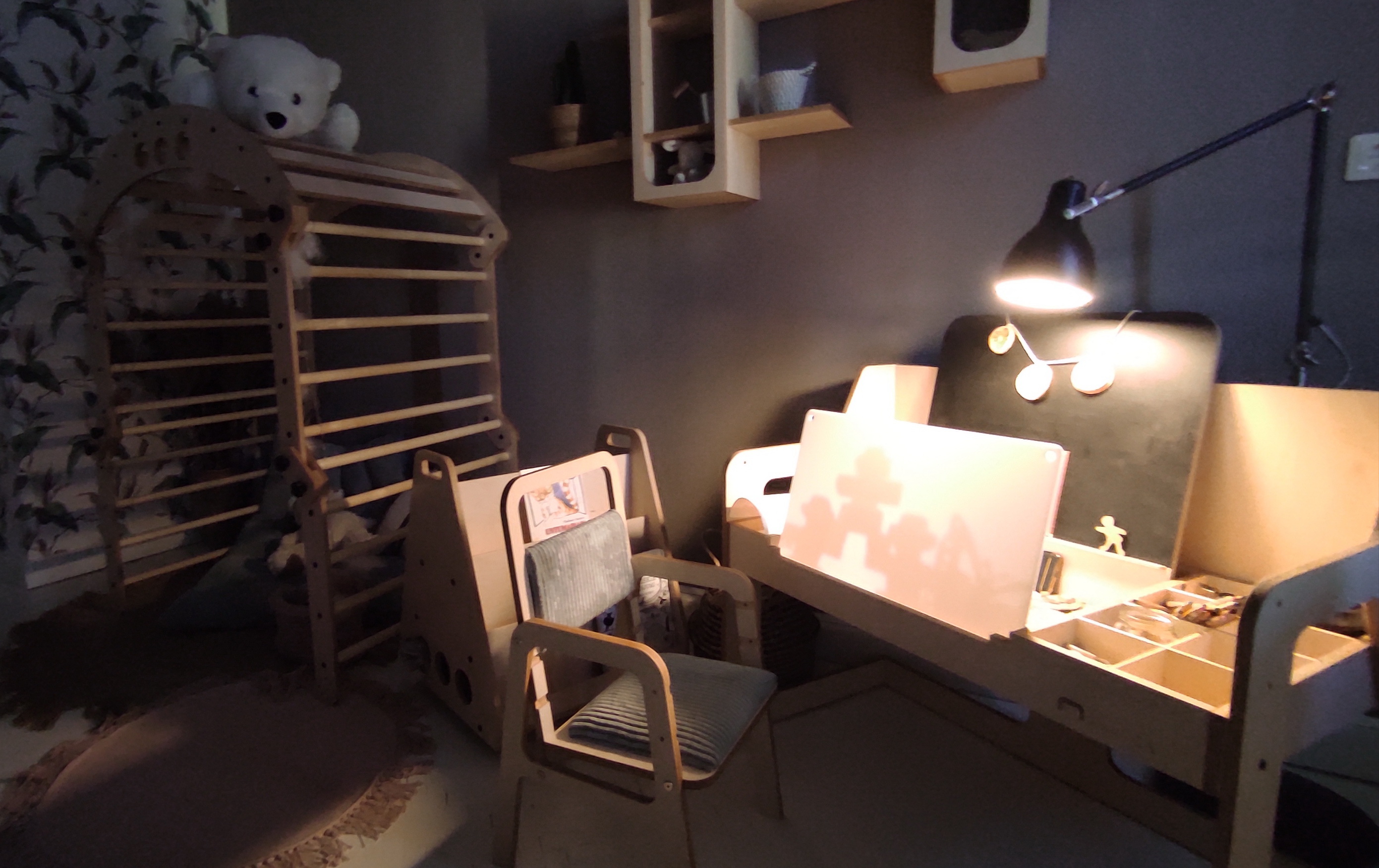
A drawing can provide the background, figures can become the cast, and the sandbox can hold their world. The transparent board might carry the weather above them: a bright sun, a gathering cloud, or snow falling over a tiny house.
An adult can begin with a simple situation: “The bear has arrived, but nobody seems to be home.”
Then leave a little silence.
The child may continue the story, change it completely, or decide that the bear needs a bed before anything else can happen. All three are good reasons to keep playing.
And then, one day, there is homework
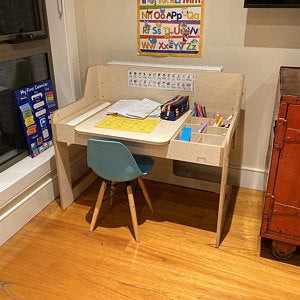
Julian, from Australia, was the first customer to buy a Luula table for a son starting first grade. His review arrived two years later—and he was delighted.
That time between buying and reviewing matters to us. By then, the table had been part of everyday life for two years.
Another father, raising his daughter on his own, bought the table when Elīza was four. He told us she spent almost every free moment there after kindergarten, absorbed in creative play and activities.
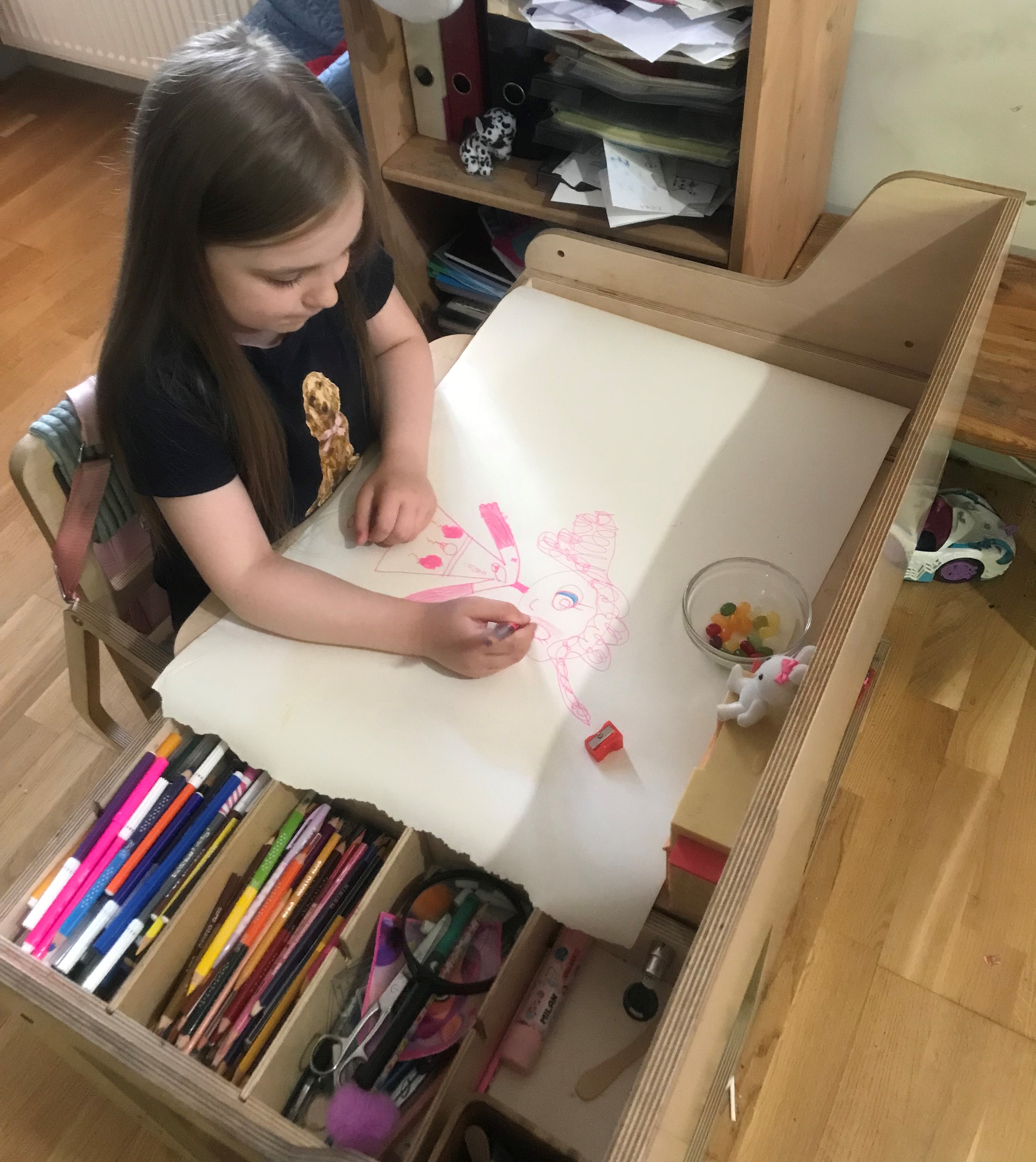
Elīza is now ten. She still uses her table, and she has grown into a capable schoolgirl who loves learning.
We would never claim that a table can take credit for that. What makes her story special is the continuity: the place where she played at four still has a place in her life at ten.
With its adjustable height and changing uses, the Luula table can stay through those years. The materials change. The drawings become more detailed. Schoolbooks arrive beside the pencils.
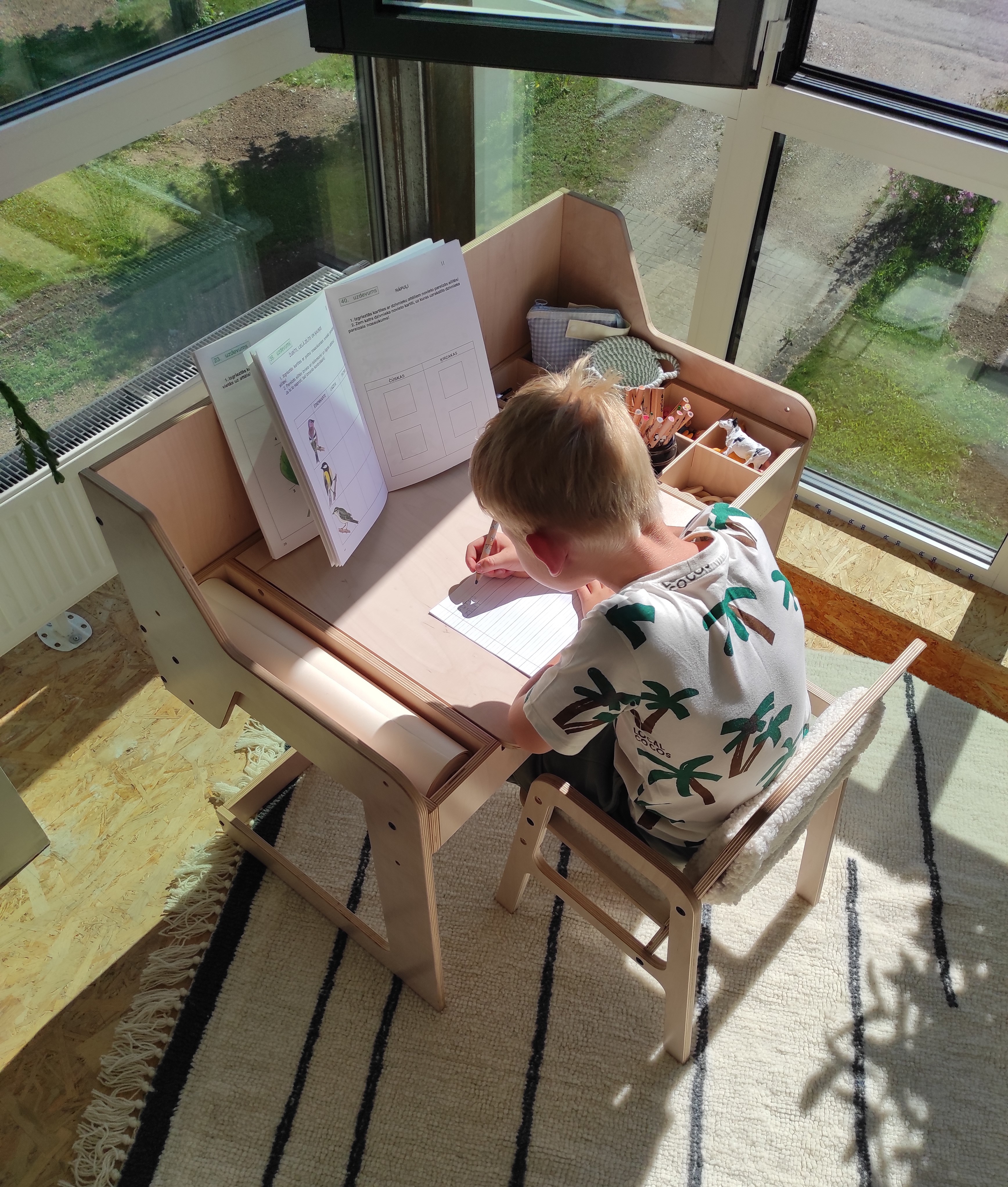
And a child who once needed to see a parent across the room may now call them over to look at something they have made.